Adroit Associates conducted the independent Phase I Completion Evaluation of the Food Security and Agricultural Sustainability for Livelihoods Improvement (FASL) Project, implemented by the Aga Khan Foundation with funding from the Swiss Agency for Development and Cooperation.
Implemented across seven provinces of Afghanistan, FASL focused on strengthening food security and agricultural livelihoods among vulnerable rural households. Phase I combined community organization, agricultural development, livelihood support, financial inclusion, sustainable natural resource management, and disaster resilience within an integrated rural development approach.
The evaluation assessed the project against the six OECD-DAC criteria of Relevance, Effectiveness, Coherence, Efficiency, Sustainability, and Impact. It documented achievements, community perspectives, lessons learned, sustainability considerations, and opportunities for strengthening future programming.
The FASL Project was designed to strengthen food security, agricultural livelihoods, and resilience among vulnerable rural households in Afghanistan.
Implemented across Badakhshan, Takhar, Kunduz, Baghlan, Samangan, Parwan, and Daikundi, the project adopted an integrated approach combining agricultural development, community organization, financial inclusion, natural resource management, and disaster resilience.
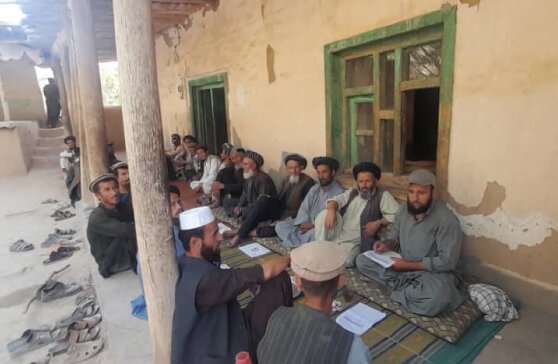
Participatory approaches were used to understand household livelihood conditions and inform tailored Livelihood Investment Plans (LIPs). The project also established and strengthened community structures, including Common Interest Groups (CIGs), Community-Based Savings Groups (CBSGs), and Community Emergency Response Teams (CERTs).
Through these interconnected interventions, FASL sought to strengthen agricultural production, expand livelihood opportunities, improve community-level financial mechanisms, promote sustainable management of natural resources, and enhance communities’ capacity to manage environmental and livelihood-related risks.
Project Objectives
FASL was structured around three interconnected outcomes: strengthening community representation through Common Interest Groups; increasing agricultural production and productivity; and promoting sustainable natural resource management and disaster resilience.
The Phase I Completion Evaluation was designed to independently assess progress against the project’s objectives and established results while generating evidence for future programming.
The evaluation examined the relevance and effectiveness of interventions, coherence with community priorities and complementary initiatives, implementation efficiency, sustainability of established structures and practices, and the broader contribution of the project to participating households and communities.
It also documented lessons, good practices, community experiences, and opportunities for strengthening the next phase of the programme.
Methodological Approach
Adroit Associates applied utilization-focused and participatory evaluation approaches, enabling the evaluation findings to support organizational learning and future programme design.
The assessment included an extensive desk review of project documentation, including progress reports, work plans, annual assessments, baseline information, capacity-building documentation, natural resource management plans, quality assurance materials, and stakeholder consultation records.
Primary qualitative research included 91 Focus Group Discussions across 46 villages, of which 33 involved female participants, as well as 51 Key Informant Interviews with project stakeholders and community representatives.
Interviews and discussions were recorded, transcribed, translated, coded, and systematically analyzed using ATLAS.ti. Findings from different sources were triangulated to strengthen the reliability and consistency of the evaluation evidence.
Quality assurance measures included field-team training, pilot testing of research instruments, field supervision, cross-validation of evidence, informed consent, confidentiality, anonymization, and secure data management.
Impact and Strategic Significance
The evaluation found that FASL established important foundations for strengthening agricultural livelihoods, community organization, financial inclusion, natural resource management, and local resilience.
Community structures formed through the project provided platforms for participation, savings, internal lending, knowledge exchange, and livelihood activities. Agricultural interventions supported productive land, irrigation infrastructure, seed access, livestock and poultry activities, kitchen gardening, agricultural tools, and improved farming knowledge.
The project also invested in rural infrastructure and livelihood development through irrigation systems, rural roads, vocational skills development, and community-based economic activities. These interventions contributed to improved access to productive resources and broader opportunities for participating households.
Natural resource management and disaster resilience formed another important component of the project. Community Emergency Response Teams and structural mitigation initiatives strengthened local preparedness and supported communities in managing environmental risks.
The evaluation further documented positive changes associated with livelihood diversification, community participation, knowledge sharing, local organization, and the adoption of improved practices.
Sustainability was supported through community-based institutions, savings mechanisms, Farmer Field Schools, natural resource management approaches, and local knowledge-sharing structures. The evaluation identified continued opportunities to strengthen market and value-chain connections, infrastructure sustainability, community institutions, inclusive participation, climate-resilient practices, and peer-to-peer learning.
Overall, the Phase I evaluation provides a strong evidence base for building on FASL’s achievements and strengthening the sustainability and effectiveness of future food security, agricultural livelihood, and community resilience programming.