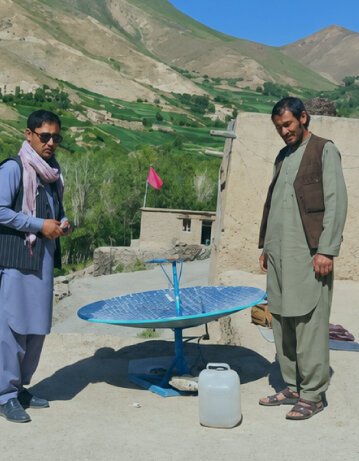
Adroit Associates implemented the Mid-Term Review (MTR) of the BMZ-funded Catholic Relief Services (CRS) project, Strengthening the Resilience of Afghan Communities through Improved Natural Resource Use and Watershed Restoration, in Bamyan Province, Afghanistan.
The CRS project operates across rural communities in Dokani Valley, Bamyan Center, and Sar-e-Qol Valley, Yakawlang No. 1, integrating watershed restoration and disaster risk management with agriculture, storage, WASH, cash-for-work, and household livelihood support to strengthen community resilience.
Adroit assessed the project’s relevance, inclusiveness, effectiveness, operational efficiency, emerging outcomes, adoption, sustainability, and accountability. Using a qualitative-dominant mixed-method design, the review combined document analysis, household verification surveys, gender-separated Focus Group Discussions, Key Informant Interviews, and structured field observations.
The MTR found the project highly relevant to community priorities and documented credible early results, particularly where watershed protection was combined with household-level agricultural, storage, livelihood, and hygiene interventions. The evaluation also identified practical priorities for strengthening equitable access, technical quality, sustainability, community management, and implementation during the remaining project period.
Project Context
The CRS project was designed to strengthen the resilience of rural communities facing interconnected environmental, agricultural, water, livelihood, and disaster-related challenges in Bamyan Province.
The project combines watershed restoration and disaster risk management with household and community interventions addressing agricultural production, post-harvest storage, water and sanitation, livelihood opportunities, and natural resource management.
Its integrated approach responds to priority challenges identified by communities, including drought, soil erosion, flooding, water scarcity, low agricultural productivity, post-harvest losses, limited livelihood opportunities, and access to safe drinking water.
Adroit was engaged to independently assess progress at the project’s mid-point and determine how effectively the intervention was responding to these priorities, which approaches were producing promising results, what barriers were affecting adoption and sustainability, and where adjustments could strengthen results before project completion.
Project Objectives
Adroit’s Mid-Term Review examined the relevance and inclusiveness of disaster risk reduction and watershed management plans, including community participation and the integration of traditional knowledge and local practices.
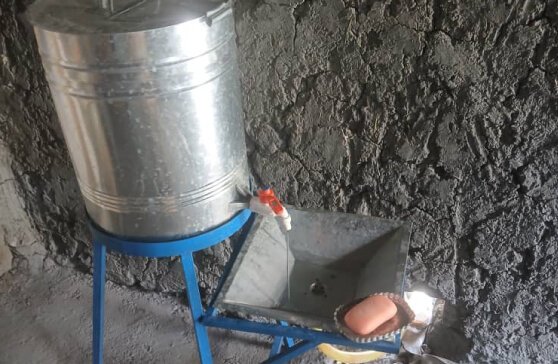
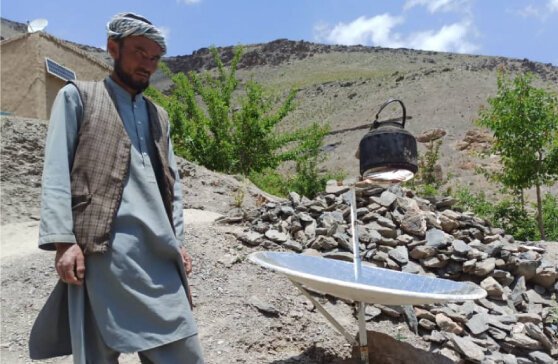
The review assessed the relevance, accessibility, continued use, and replication potential of promoted agricultural, livelihood, environmental, storage, and household technologies and practices.
Another major objective was to examine the project’s contribution to household preparedness, recovery, and resilience, including changes in the ability of different household groups to manage environmental and livelihood shocks.
The evaluation also assessed adoption of promoted practices, reported changes in agricultural production, income and food availability, and differences in participation and outcomes among household groups.
Adroit further examined implementation effectiveness and operational efficiency, sustainability, community ownership, operation and maintenance arrangements, accountability mechanisms, peer learning, and opportunities for community-led replication.
Methodological Approach
Adroit implemented a qualitative-dominant mixed-method evaluation design, combining documentary, quantitative, qualitative, and observational evidence.
The desk review covered the project logframe, Performance Management Plan, baseline, Annual Assessment, post-distribution monitoring reports, and other relevant project records.
Primary research included a targeted household verification survey across selected project communities, designed to address specific evidence gaps rather than duplicate the project’s probability-based Annual Assessment.
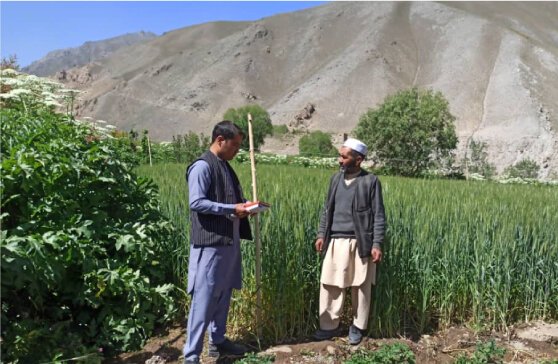
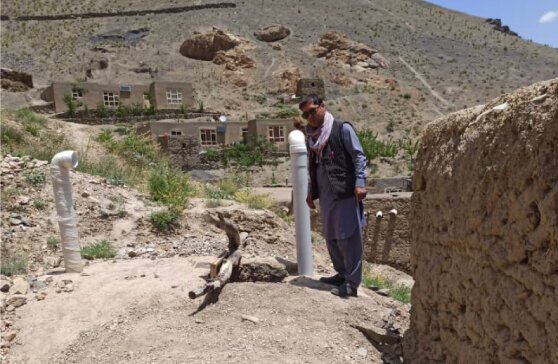
Adroit also conducted gender-separated Focus Group Discussions with project adopters and non-adopters, Key Informant Interviews with CRS staff, community leaders, Watershed Management Committees, and Water User Committees, as well as structured field observations of project-supported interventions.
Quantitative data were cleaned and analyzed descriptively, while qualitative evidence underwent systematic coding and thematic analysis. Findings were disaggregated by relevant household characteristics and triangulated across surveys, FGDs, KIIs, observations, and documentary evidence.
Quality assurance included field supervision, data verification, structured review processes, triangulation, and validation. Ethical safeguards incorporated informed consent, confidentiality, safeguarding, and appropriate protection of participant information.
Impact and Strategic Significance
Adroit’s Mid-Term Review found the project highly relevant to the environmental, agricultural, water, and livelihood priorities identified by participating communities.
The integrated model showed promising early results where community-level watershed protection was connected with household-level agricultural production, storage, livelihood, and hygiene support. Promoted practices demonstrated varying levels of adoption and continuation, with local relevance, affordability, visible benefits, technical support, and access to resources influencing uptake.
The evaluation also identified differences in accessibility and participation among household groups, reinforcing the importance of differentiated approaches to ensure that project benefits remain inclusive.
Adroit’s findings highlighted opportunities to strengthen watershed management implementation, water access, seasonal readiness, agricultural input quality, storage systems, operation and maintenance arrangements, community feedback mechanisms, peer learning, and adaptive management.
The MTR provided CRS with an evidence-based roadmap for the remaining implementation period, supporting corrective action, improved technical quality, stronger community ownership, equitable access, and greater sustainability of project-supported systems and practices.