
Adroit Associates conducted a baseline assessment for a climate-resilient livelihoods program implemented by Prosper Global (formerly Mercy Corps). The study established a comprehensive evidence base to inform program design, implementation, and future impact measurement.
This baseline assessment establishes statistically reliable benchmark values for the programme “Strengthening Climate-Resilient Livelihoods and Economic Opportunities in Rural Afghanistan,” implemented in Helmand and Kandahar provinces. The study applies a rigorous mixed-methods design, combining a representative household survey (n=620) with qualitative data from focus group discussions, key informant interviews, and field observations.
The baseline examined household livelihood conditions, climate-related vulnerabilities, and economic resilience capacities across targeted communities. It provides a benchmark against which project outcomes will be measured, ensuring that interventions are responsive, data-driven, and aligned with local realities.
Afghanistan’s rural economy is highly dependent on climate-sensitive sectors such as agriculture and livestock. Increasing climate variability — manifested through droughts, erratic rainfall, and environmental degradation — has significantly affected productivity, income stability, and food security.
Households face compounding challenges including limited access to markets, weak infrastructure, and reduced livelihood diversification opportunities. These constraints are further intensified by economic instability and reduced coping capacity among vulnerable populations.
The Prosper Global project was designed to strengthen climate resilience by supporting sustainable livelihood strategies, improving adaptive capacity, and promoting diversified income sources.
The programme is implemented in Helmand and Kandahar provinces, targeting rural districts including Dand, Daman, Kandahar City Center, and Nad-e-Ali. These areas are part of Afghanistan’s arid belt and are highly exposed to recurrent drought, rising temperatures, erratic rainfall, and chronic water scarcity.
Project Objectives
The primary objective of the baseline assessment was to establish benchmark indicators across livelihoods, resilience, and climate vulnerability dimensions.
The study focused on assessing household income sources, agricultural practices, food security status, and exposure to climate-related shocks. It also examined adaptive strategies, access to resources, and barriers to economic participation.
Additionally, the assessment aimed to identify gaps in resilience capacity, including access to climate information, financial services, and sustainable livelihood opportunities. These insights are critical for designing targeted interventions that enhance long-term resilience.
Methodological Approach
Adroit Associates applied a structured mixed-methods approach to ensure comprehensive and reliable data collection.
Quantitative data was collected through household surveys across targeted communities, capturing key indicators related to income, food security, climate exposure, and livelihood strategies. Digital data collection tools were used to ensure accuracy, consistency, and real-time validation.
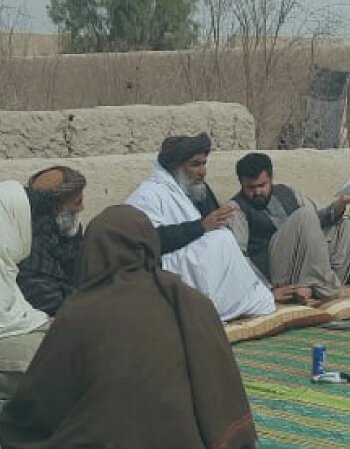
Qualitative data was gathered through Focus Group Discussions (FGDs) and Key Informant Interviews (KIIs) with community members, local leaders, and sector stakeholders. These engagements provided contextual insights into climate risks, coping mechanisms, and community priorities.
The assessment framework integrated climate resilience analysis with socioeconomic evaluation, ensuring a holistic understanding of vulnerability and capacity.
Quality assurance measures included enumerator training, field supervision, data validation protocols, and adherence to ethical research standards.
Impact and Strategic Significance
The baseline assessment highlights significant exposure of households to climate-related shocks and limited diversification of livelihood sources. Many communities rely on traditional practices that are increasingly vulnerable to environmental changes.
Findings indicate gaps in access to climate-resilient agricultural inputs, financial services, and market linkages, which constrain households’ ability to adapt and recover from shocks. At the same time, there is strong potential to enhance resilience through improved practices, capacity building, and targeted support.
The study provides a critical foundation for designing interventions that promote sustainable livelihoods, strengthen adaptive capacity, and reduce vulnerability to climate risks.
It also establishes a clear results framework for tracking progress over time, enabling Prosper Global to measure impact and refine program strategies based on evidence.
This assignment demonstrates Adroit Associates’ expertise in delivering high-quality baseline assessments that integrate climate, economic, and social dimensions in fragile contexts.